AI-Generated Document Fraud: Why the Defence Must Move Upstream
- Qryptal Team
- Aug 31, 2026
- 3 min read
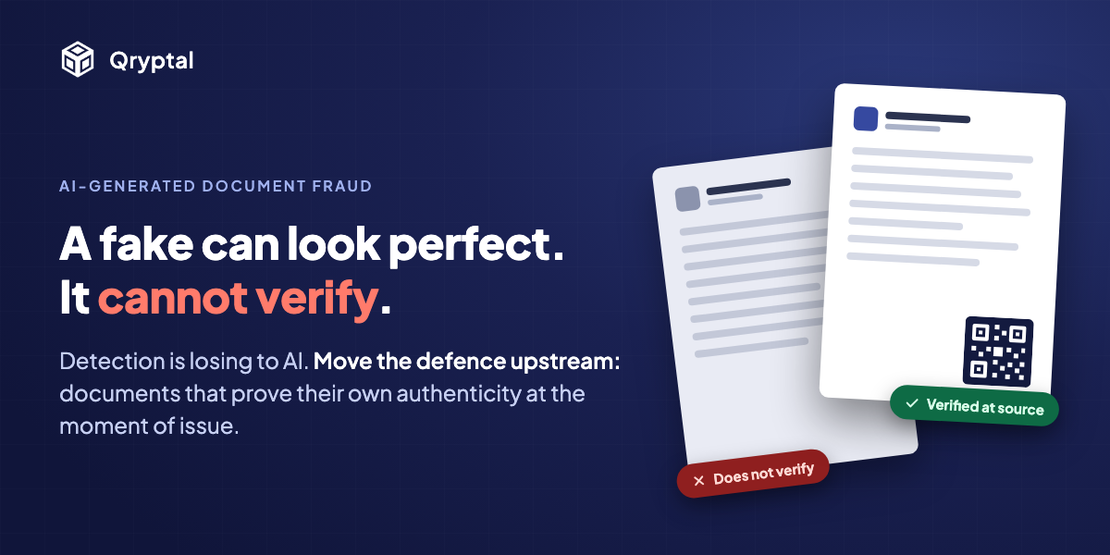
A fake can look perfect. It cannot verify.
AI has already perfected one industry: fake documents.
In February 2026, Commonwealth Bank of Australia reportedly self-referred around A$1 billion in suspected fraudulent home loans to police and regulators. ASIC, AUSTRAC and NSW Police are now investigating.
The best-resourced defence in the market still missed it
CBA is one of the best-resourced lenders anywhere. It spends roughly A$1 billion a year on fraud, scams, cyber threats and financial crime, and its systems monitor more than 80 million signals a day. Yet the signal that mattered reportedly came not from any of those systems, but from the bank’s internal SpeakUP whistleblower platform.
Reporting on the case describes the suspect applications as including allegedly doctored income documents and AI-generated submissions. The matter is still under investigation, and CBA, ASIC and police have been measured about the exact mechanism. But the broader pattern is no longer in question: AI has made document fabrication cheap, convincing, and scalable.
Why detection is losing
The verification chain banks built over thirty years is pattern-matching: trained eyes, template checks, anomaly scoring. It assumed forgery could be contained within a cost-of-doing-business line item, because producing a convincing fake took skill and time.
That assumption has collapsed. Generative tools can now produce payslips, bank statements and income documents that pass visual inspection in seconds, at near-zero marginal cost. Spending more on downstream detection means chasing a curve that bends faster than any budget can.
The defence has to move upstream
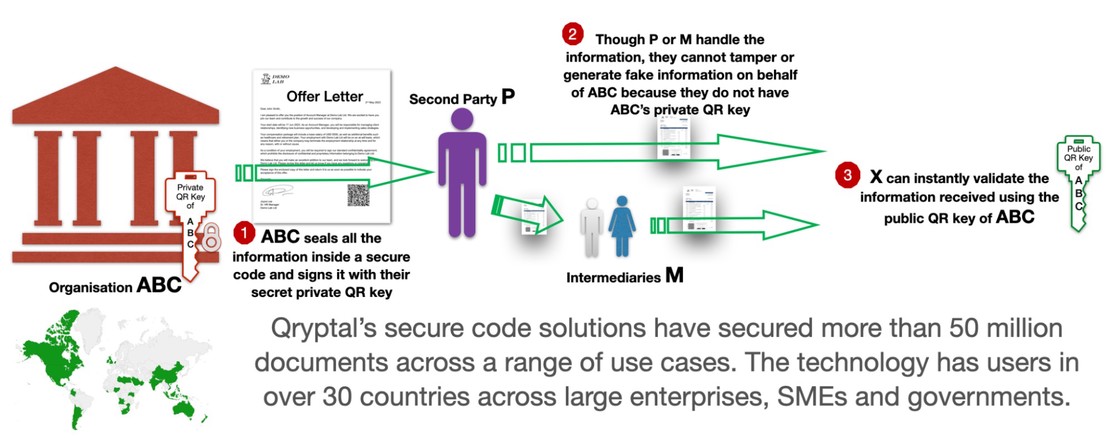
There is a structural answer: documents should prove their own authorship at the moment they are issued.
When the issuing organisation QR-stamps a document with a cryptographic signature that only it controls, authenticity stops being a judgement call. The signature travels with the document and can be checked by anyone, whether the document is printed, digital, or scanned. Verification takes a phone camera, not a database lookup, a login, or a call to the issuer.
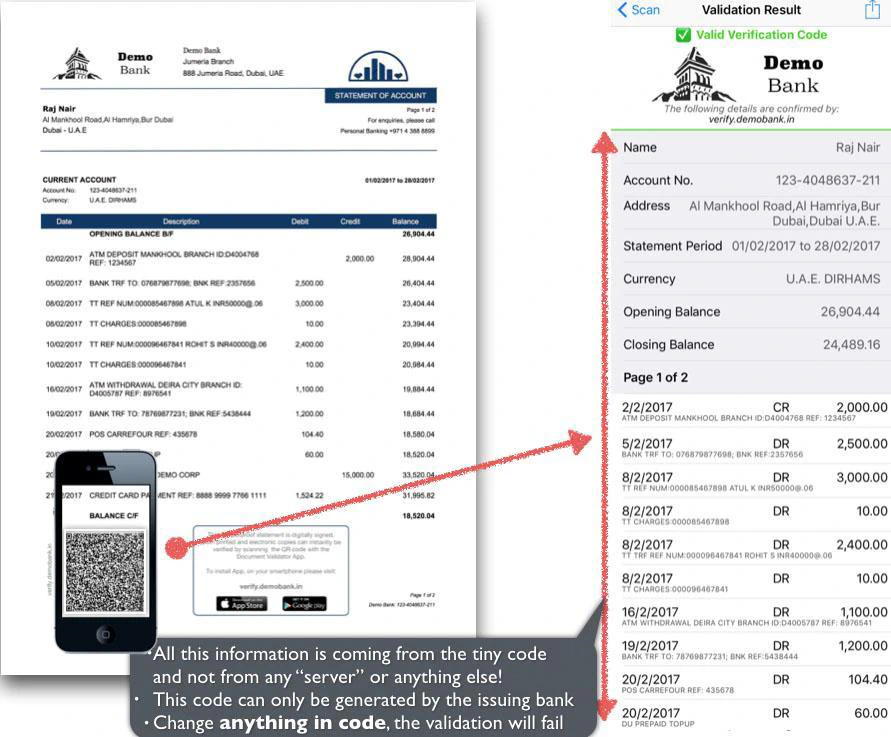
The information displayed on scanning comes entirely from the signed code itself, not from any server. Change anything in the document or the code, and validation fails. A forged document may look perfect. It will not verify.
The economics flip
Downstream detection scales with fraud volume: more fake applications mean more analysts, more signals, more investigation cost. Upstream verifiability scales with the document: the cost of signing at issue is fixed and tiny, and it does not grow because fraudsters got better tools. A bank spending close to A$1 billion a year on financial crime is still bearing much of that burden downstream. Baking verifiability in at the source is structurally cheaper, because the economics no longer track the fraud curve.
Issuers do not need to wait
Individual issuers can start today with the documents they control: salary certificates, account statements, approval letters, licenses, tax records, compliance certificates. Each verifiable document removes one weak link from the chain, and each verifying organisation stops accepting one class of fake.
Deployment no longer requires an integration project either. A folder-based workflow can go live in about a week, with zero changes to core systems. We described how a GCC bank did exactly that in this case study.
The system-wide fix accelerates when authorities educate and mandate, and most issuers comply. Then systemic costs drop together.
A stitch in time saves nine. In the age of AI-enabled fraud, that is the only stitch that holds.
If your organisation issues documents that others rely on, we can have sample documents QR-stamped and verifiable within 48 hours.